


Priya Auton
2 Mar 2026
Digging into the difference between biomimicry and biophilia in interior design, and how both can be used together to create meaningful, nature-informed spaces.
Nature has long influenced design, but the terms biomimicry and biophilia are often used interchangeably, despite referring to distinct concepts. While both draw inspiration from the natural world, they operate in different ways and offer different benefits within interior design. Understanding the difference allows designers to use each approach more intentionally.
What is biophilia?
Biophilia refers to the human tendency to seek connection with nature. In interior design, biophilic design focuses on incorporating natural elements into built environments to support well-being.
This might include:
living plants
natural light
water features
organic materials such as wood or stone
views of nature or outdoor spaces
Research suggests that biophilic environments can reduce stress, improve mood, and support concentration. In educational and healthcare settings especially, these benefits can have a meaningful impact on wellbeing.
However, biophilic design can come with practical challenges. Living plants require maintenance, appropriate lighting, and ongoing care. Poorly maintained greenery can quickly undermine the intended effect.
What is biomimicry?
Biomimicry takes a different approach. Rather than incorporating nature directly, it looks to natural processes, forms, and systems as inspiration for design solutions.
Examples might include:
furniture inspired by organic growth patterns
layouts based on natural movement flows
materials that mimic natural textures or structures
design strategies informed by how nature solves problems
Biomimicry allows designers to capture the essence of nature without relying on living elements, making it particularly useful in environments where maintenance or hygiene is a concern.
Pros and cons of each
Biophilia offers a direct sensory connection to nature and can improve air quality, reduce stress, and create calming environments. However, it can be resource-intensive and requires long-term commitment.
Biomimicry offers durability, flexibility, and ease of maintenance. Biomimetic elements can be integrated subtly and consistently, but they do not provide the same environmental benefits as living systems.
Neither approach is inherently better; their value depends on context, use, and constraints.
Using biomimicry and biophilia together allows designers to balance experience and practicality. Living elements can be introduced where appropriate, supported by biomimetic forms, patterns, and systems elsewhere. This layered approach ensures that spaces retain their nature-inspired qualities even if certain elements change or are removed over time.
Simple, everyday biomimicry
Biomimicry does not need to be complex or literal. Small, thoughtful gestures can have a powerful impact.
Examples include:
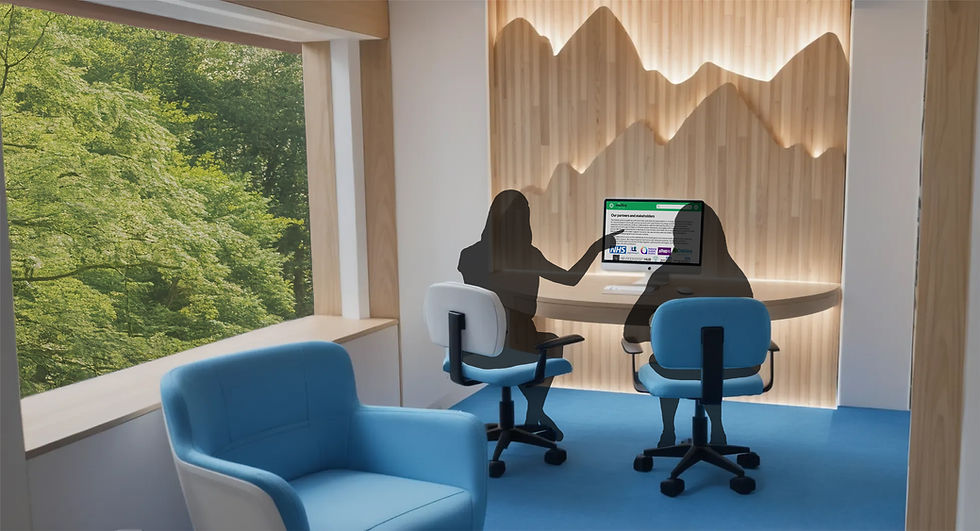
a semi-circular desk inspired by the protective form of a reishi mushroom
frosted or diffused glazing inspired by fog, creating privacy without blocking light
blue-toned wayfinding paths that echo rivers, which humans instinctively follow
ceiling forms inspired by tree canopies to create a sense of shelter
circulation layouts that mirror natural meandering paths rather than rigid grids
These ideas demonstrate how nature can inform design decisions at many scales, from furniture to spatial planning.
Designing with intention
Both biomimicry and biophilia encourage designers to slow down and observe the natural world more closely. When applied intentionally, they can support emotional comfort, orientation, and connection within interior spaces.
Rather than treating nature as decoration, these approaches frame it as a design partner, one that offers inspiration, guidance, and long-tested solutions.