


The Seedling Centre
University Final Major Project | Education & Healthcare
Linthwaite House, Crook Road, Windermere, Cumbria, LA23 3JA


Project Information
The Seedling Centre is a learning and activity hub for neurodivergent adults diagnosed later in life. Combining evidencebased support with a calming, nature-inspired environment, the centre places wellbeing, selfdiscovery, and personal growth at its core. Using biomimicry, the Seedling Centre creates a soothing, sensory-friendly space to reduce cognitive overload.
Concept
The core concepts are biomimicry and ‘soothing’ design; both working in tandem to create a calming environment whilst addressing the emotional and physiological needs of users.
Inspired by forms and textures of the Lake District and the Linthwaite House property, many of the shapes are translated into design features throughout the Seedling Centre.


Zoning & Circulation Plans
Rooms were grouped together by level of stimuli, then separated onto different floors to prevent sound transfer
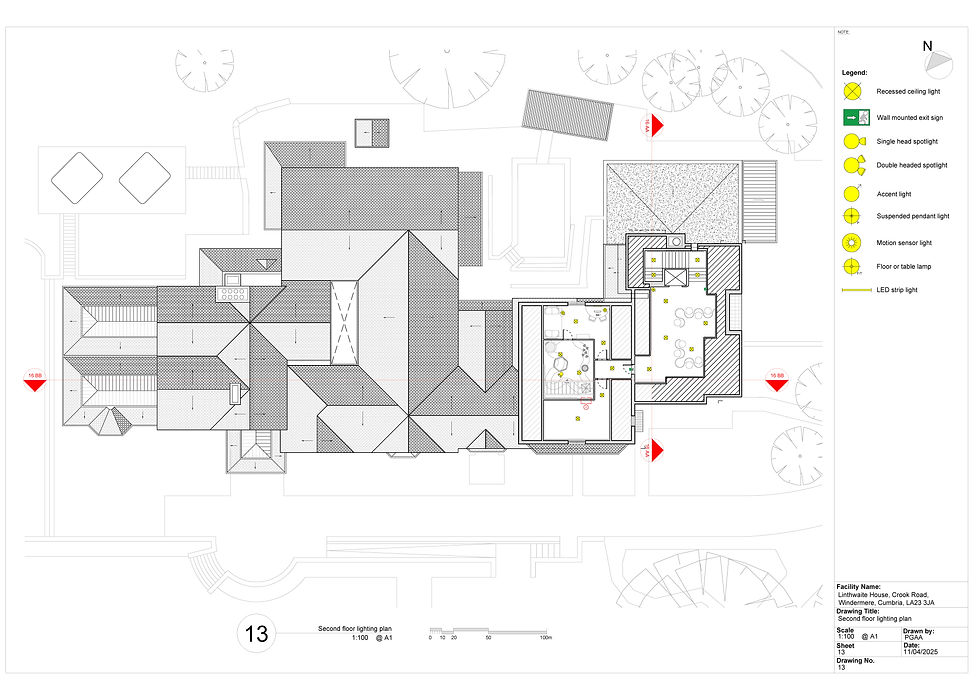
GA & Lighting Plans
Lighting and spatial planning were carefully considered to reduce sensory overwhelm while supporting different modes of use. Soft, adjustable lighting and clear zoning help create an environment that feels calm, legible, and adaptable to individual needs.




Logo & Reception
As the first point of contact where users expectations are shaped, the reception controls the sensory stimuli and helps users transition from outdoors to inside. Soft, natural woods and moss are grounding and pleasant to touch, while large windows light the space instead of harsh, artificial lights.
Tactile Faux Moss Walls
A moss-covered wall on the property inspired the design of the faux moss wall for people to touch. It replaces fragile moss with durable materials, mimicking common moss found in the Lake District.


Tree Tunnel & Modular System
This canopy of branches found during my site visit informed this “tree tunnel”. The partially enclosed space creates a sense of safety without isolation, echoing the “prospect and refuge theory”.
Quiet Sensory Room
Designed for hypersensitive users, the quiet sensory room offers a calming, low-stimuli environment with soft natural colors, acoustic insulation, and soothing furniture (bean bags, sensory swings, rocking chairs, ect) providing deep pressure and vestibular stimulation.


Active Sensory Room
Unlike the quiet room, the multi-sensory room is designed for hyposensitive users, using vibrant colours, lights, textures, interactive visuals, and varied seating to stimulate the senses, whilst the acoustic defences prevent sound transference.
Custom geometric windows, inspired by the choppy waters of Lake Windermere, help divide the rooms into zones whilst allowing viewing for safety.
1-to-1 Learning Rooms
This reishi mushroom found on site inspired the desk, which extends from a feature wall like the protruding mushroom, and is set against a backdrop inspired by the Lake District skyline. To aid focus for easily distracted users, vertical timber slats guide the eye downward, helping redirect attention to the desk.


Nap Room
To support neurodiverse users who struggle with sleep, restful nap pods were created with soft, circular forms inspired by honeycomb and water ripples, and designed in calming purple tones linked to sleep through lavender and night skies
Outdoor Quiet Pods
Wanting to create a safe, soothing place outdoors for guests to retreat to for a quiet moment, this simple pavilion has two levels so users can look out and enjoy the stunning views of Lake Windermere.


Materials
Plywood with a cork core traps and absorbs sound (up to 3.3dB/mm), making it a great material for noise reduction, as well as helping to meet sustainability targets.
Section Model
Laser cut MDF created this Section AA model which shows depth, layers and provides greater understanding of how the space functions.


Website & App Mock-ups
To ensure cohesive design between the interiors and the brand, the online and printed materials match the colour scheme and materials of the centre


